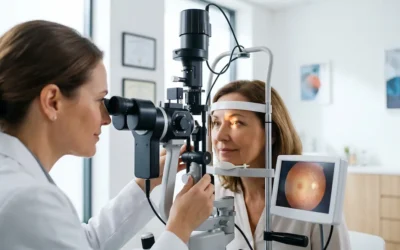
Ocular hypertension means the pressure inside the eye is higher than normal, but there are not yet signs of glaucoma-related damage to the optic nerve or peripheral vision. Because high eye pressure is a major risk factor for glaucoma, regular glaucoma exams can help monitor eye health and catch important changes early.
Ocular hypertension does not always lead to glaucoma. However, it does mean you may need more frequent eye exams and a personalized plan to protect your vision.
What is ocular hypertension?
Ocular hypertension occurs when intraocular pressure (IOP) is above the typical range, often above 21 mm Hg. The eye continually produces and drains fluid. If that fluid does not drain efficiently, pressure can build inside the eye.
High eye pressure alone is not the same as glaucoma. Glaucoma is diagnosed when pressure or other factors cause damage to the optic nerve and, in many cases, vision loss. Some people with ocular hypertension never develop glaucoma, while others can develop glaucoma even with eye pressure in the normal range.
Does ocular hypertension always lead to glaucoma?
No, ocular hypertension does not always lead to glaucoma. Many people with elevated eye pressure do not experience optic nerve damage or vision loss. Still, higher pressure can raise the likelihood of developing glaucoma over time, especially when other risk factors are present.
Your eye doctor considers several factors — not just eye pressure — when determining your risk, including:
- The appearance of your optic nerve
- Results of peripheral vision testing
- Corneal thickness
- Age and overall health
- Family history of glaucoma
- Race and ethnicity
- Changes in your eye pressure over time
A comprehensive exam gives your doctor a clearer picture of whether monitoring alone or treatment is appropriate.
Who is more likely to develop glaucoma from high eye pressure?
People with ocular hypertension may have a greater chance of developing glaucoma if they have additional risk factors. A family history of glaucoma, thinner corneas, certain health conditions, and changes to the optic nerve can all affect an individual’s risk. Understanding the causes of glaucoma can help you and your eye doctor determine how closely to monitor your eye health.
How is ocular hypertension monitored?
Ocular hypertension is monitored through regular exams that track both eye pressure and the health of the optic nerve. Your eye doctor may use imaging, visual field testing, and corneal measurements to establish a baseline and watch for changes.
Your recommended schedule depends on your results and risk level. Some patients may only need periodic monitoring, while others may benefit from more frequent visits. How often you should be screened for glaucoma can also depend on age, family history, and overall eye health.
Will ocular hypertension need treatment?
Not everyone with ocular hypertension needs treatment right away. If your risk of glaucoma is low and your test results remain stable, careful monitoring may be the right approach.
If your risk is higher, prescription eye drops or other treatments may be recommended to lower eye pressure and reduce the chance of optic nerve damage. The right plan is based on your individual exam findings — not a single pressure reading.
Protect your vision with proactive glaucoma care
Ocular hypertension can be managed before it becomes a larger concern. Regular glaucoma exams help your eye doctor track changes, assess your individual risk, and recommend care designed to preserve your vision. Schedule an appointment to discuss your eye pressure and glaucoma risk.